This was first posted on my Substack, “The Slow Down, a Place for Friends,” on October 8, 2023. Since then, I decided to stop using Substack and will be moving content to my site over time.
When I was a cute little one, I loved dancing in the living room. The radio recording of Paula Abdul’s “Straight Up” was constantly rewound, and Janet and Michael Jackson were on repeat as I imitated their countless dance moves in hopes of becoming a background dancer for them one day. Lowkey, I thought I’d be able to join their family until I saw the ABC television movie event, The Jacksons. No thanks. I still can’t look at Lawrence-Hilton Jacobs as anyone but Joe Jackson. I’m sure he’s a nice guy, but…sorry to this man.
Dance is awful
Stepping into the studio was the best and probably worst thing to ever happen to me. I advanced my dance skills, sure, but at what cost? If we’re going to talk diet culture, look to the wonderful decade of the 90s. Special K diets, Slim Fast, and Snackwells were all the rage. Uncle Phil was constantly the butt of jokes for his size on The Fresh Prince of Bel-Air (including a traumatic episode where he had a heart attack). Eddie Murphy had an unlimited budget for costumes, hair, and makeup for The Nutty Professor One AND Two to portray severely obese people and be the literal butt of the jokes (I remember crying in the bathroom because the jokes were a little too personal).
On top of cultural and societal pressures, the pressure to have the right body, i.e., a skinny body, is heavily present in the dance environment. As a shock to no one, dance is very Eurocentric (we’ll dissect how ballet, being the foundation of dance, is indeed racist in another email, maybe later) and heavily emphasizes your body looking like puberty will never find you. Balanchine, a key principle in NYC Ballet, is partially to thank for that.
Dance is wonderful
And yet, I find myself drawn to dance. The way you can interpret a song through movement is fascinating. In high school, I was in the drill team, and any time there was a hip-hop routine, I was in the front. I even got voted “Best Hip Hop Dancer” at the senior banquet, and yes, I put that on my resume 20 years later.
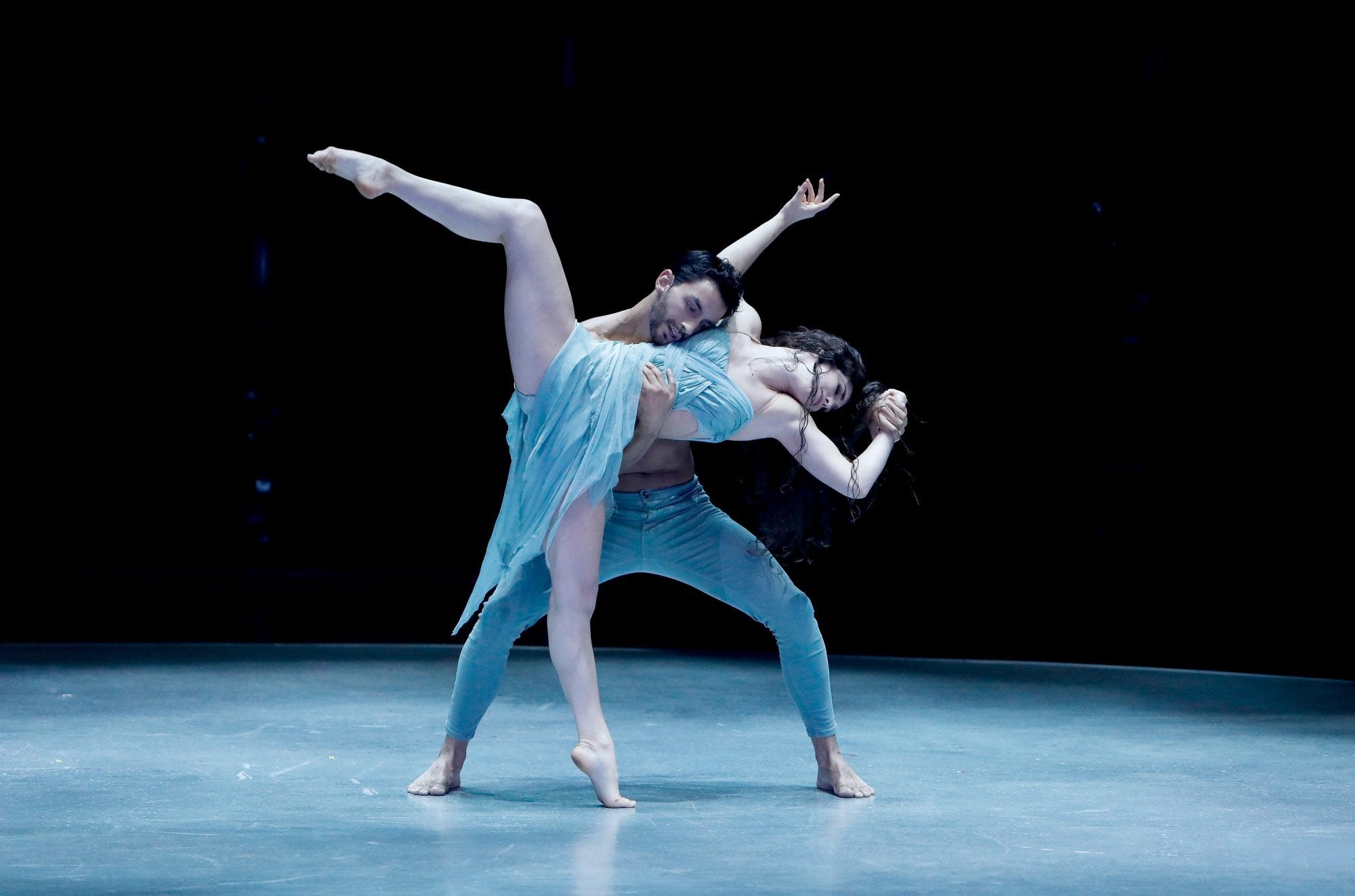
But contemporary and jazz really fascinate me. Every summer, I’d watch So You Think You Can Dance and admire routines by Mia Michaels and Mandy Moore (not the singer/actress). They told a story in an emotional, powerful way. How they managed to find the hidden beats in a song and bring them out through their choreography will always remain a mystery. I wanted to do that. I wanted to dance in a way that challenged my skill set and overall knowledge. But my body got in the way.
Every single time I thought about dancing, the obvious difference between myself and the dancers I admired on TV stood out. I didn’t see a plus-size contemporary dancer unless they were used as the butt of the joke during auditions. You know, the segments thrown in for comedic relief before the dancer with the tragic story steps up to audition? There was even a moment when I said I was going to train for an entire year and audition for said show. Even if I didn’t make it, at least I tried. Ha.
Returning to dance
2017 was the year I returned to dance. I took a modern class (i.e., intricate floor-rolling movements) and boy, oh boy…I was no longer the high schooler who could adapt to styles. My back hurt, my knees popped like Orville popcorn, and I was not in the shape I once was. I would go on to sign up for Saturday ballet classes at the same college for the sake of dancing. The teachers were/are different than the ones I encountered in my youth. This current studio is a safe space for all, regardless of skill level, race, body size, etc. If you want to dance, you dance. Ta-da. The thing is—I love it and feel lost without it; I absolutely hate the idea of dancing sometimes.
Dance has not caught up with body positivity.
We have one body, and yes, I know all about the body positivity movement and body acceptance. It’s a cute theory, and I love that for everyone who believes it, but the reality is, I, along with a lot of others, don’t. If instead of drinking Slim Fast at eight years old to get rid of my “jiggly tummy,” I saw someone with a “jiggly tummy” dancing, maybe things would be different. If instead of creating chocolate-covered stuffed cardboard and calling it “healthy,” we didn’t stigmatize food at all, maybe my peers and I wouldn’t be struggling with “good” and “bad” foods.
If it weren’t for shows like Making the Team pointing out the “love handles” on the dancer who has a six-pack, we wouldn’t do that, covering our stomach with our hand while standing around between exercises in class.
One day, I was procrastinating on Instagram when Hozier posted videos of dancers performing pieces set to some of his music. Half of me teared up, as I am currently debating if I am doing a solo for the Fall concert I’m taking ballet at, or if I’m going to push it to Spring and then push it to Fall and then push it to… On the one hand, I would levitate to Venus and high-five Pluto if he saw me do a routine to the live version of Movement and posted it online, but then I have this idea that he would see it, laugh, and say, “Don’t ever do that again.”
Dance is…complicated.
My relationship with dance is one of the most complicated relationships I’ve ever had. “If I don’t dance, I get depressed, but when I dance and look at myself, I hate my body. So the thing that makes me happy makes me depressed, but also I get depressed without it because I’m not doing the thing that makes me happy.” The love-hate is strong. I have no idea how to get over it. Can one get over it? When you’ve grown up with the message that your body is wrong because it’s bigger, disabled, smaller, darker, or lighter than what’s acceptable, how does one snap out of it? When it comes to dance, you can’t just leave your body behind or put it on pause. Dance is a literal movement with your body, so you need it. You need the thing you hate to do the thing you love.
Kind of messed up, huh?